
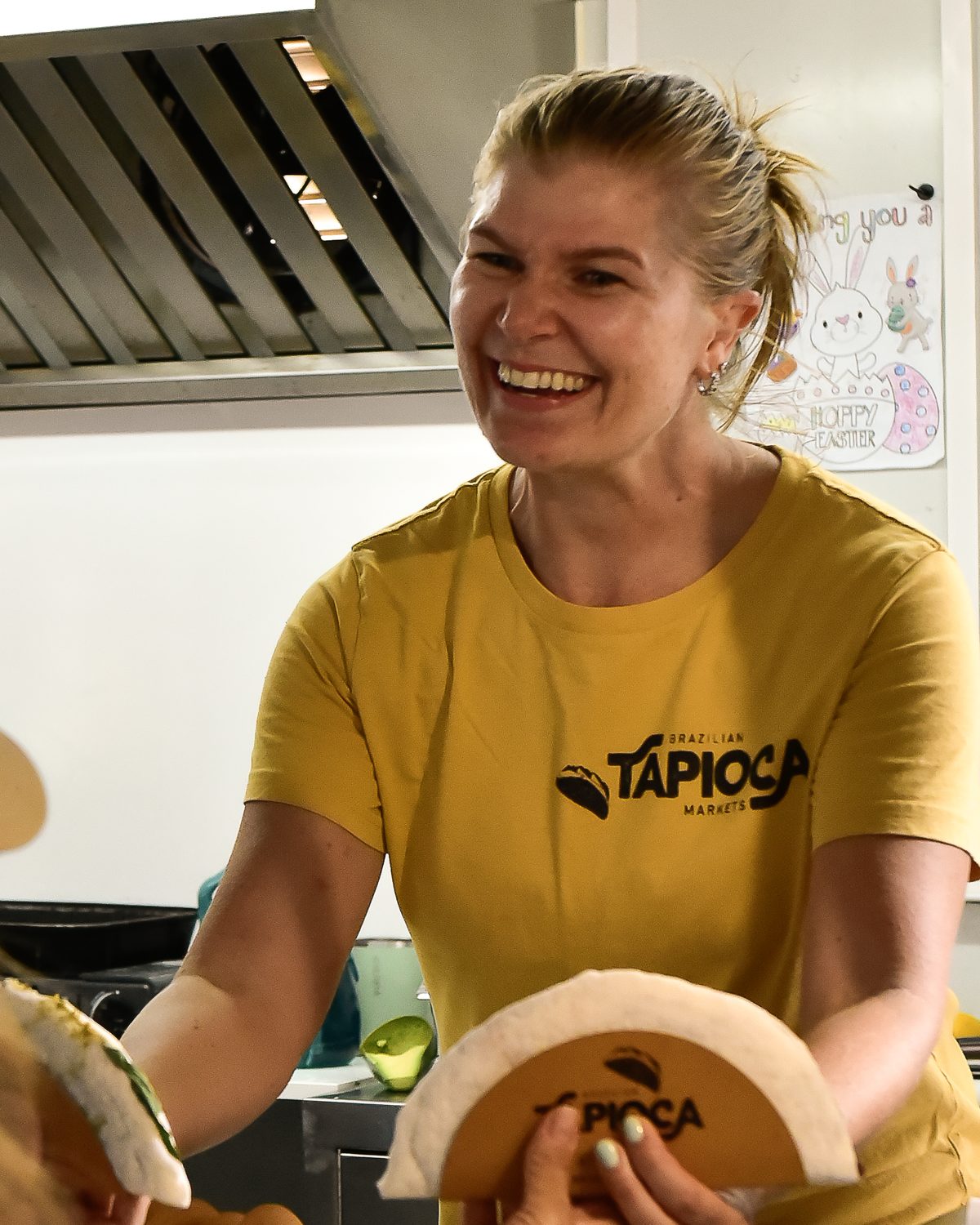
She trained as a nutritionist first
Before any of the cooking, Maria studied nutrition in Brazil — a four-year diploma, the full course of study rather than a short certificate. It's the part of her background people are most surprised by, and it's the part that quietly shapes everything on the board. She knows what's in the food, what it does, and how to build a filling that actually holds you until lunch.
Then she went into fine dining
She moved from nutrition into professional kitchens and spent six years in top-tier fine dining around Noosa. Fine dining is unforgiving by design — everything measured, everything timed, nothing leaving the pass unless it is right. That standard didn't soften when she swapped a restaurant kitchen for a market trailer. It's the same discipline, just carried out a metre in front of you instead of behind a closed door.
A trained chef, not a home cook with a side-hustle. That's the whole difference.
So why a market stall?
Because fine dining is a wonderful place to learn and a hard place to actually meet anyone. Maria bought this business because she cares, above everything else, about three things: quality, cleanliness, and the people she's cooking for. At a market stall she gets all three, in front of her, every weekend.
She cooks every wrap herself, to order, in a pan a metre from your face. There's nowhere to hide — which is exactly how she likes it.
The gluten thing is not a marketing line
Plenty of places write "gluten free" on a sign. Maria runs a celiac-safe operation, which is a different and much harder thing.
There is no gluten at the stall — not in a filling, not in the pan, not on the bench. There is no gluten in the kitchen where prep happens either; it isn't stored there and it isn't used there. Equipment and utensils are separate throughout, because you cannot cross-contaminate with something that was never in the building.
If you're celiac rather than gluten-sensitive, you'll know why that distinction matters, and why so few stalls can honestly claim it. Ask her about it at the market — she is genuinely happy to walk you through exactly how it works.
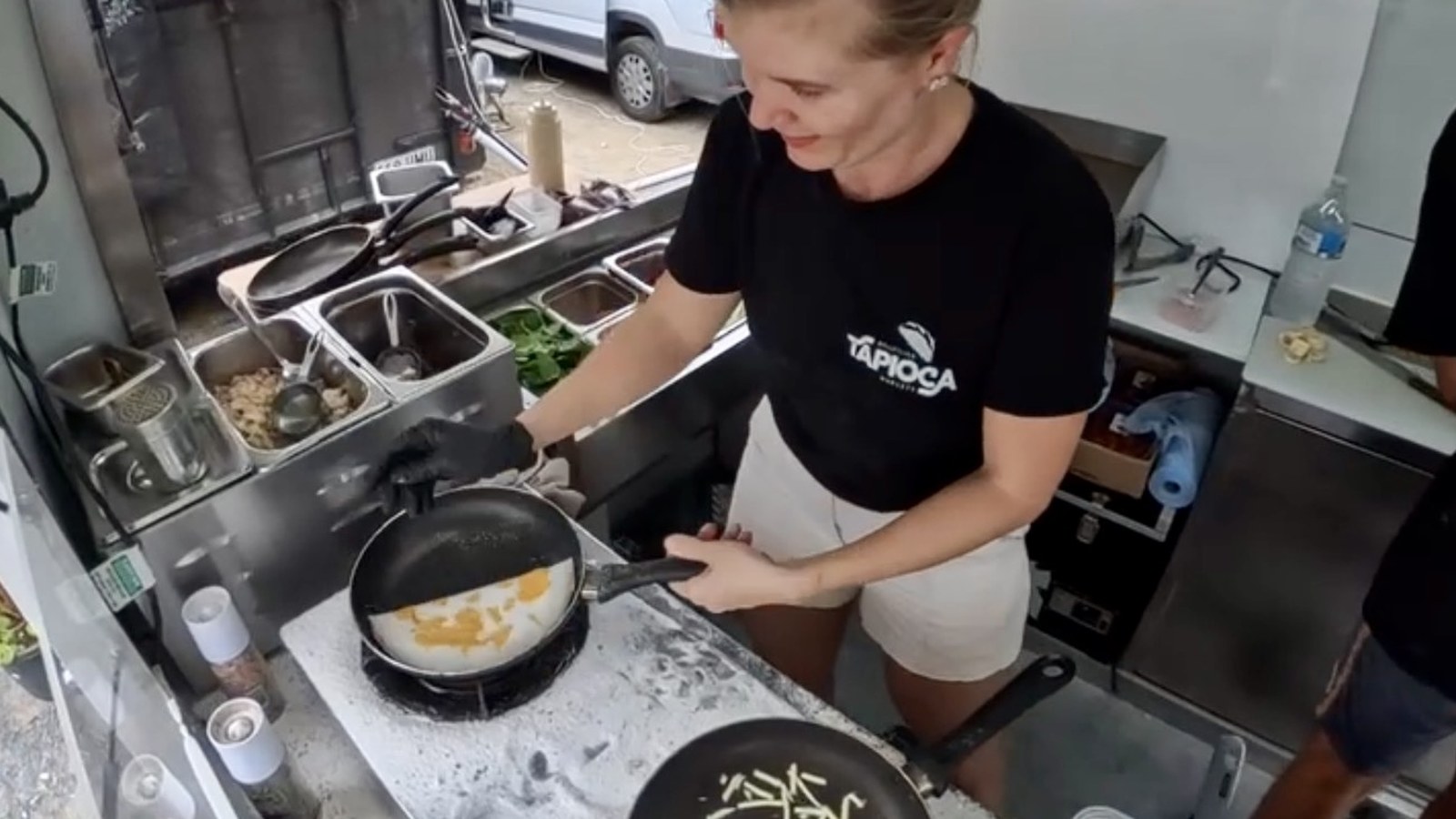
She knows the regulars by name
Around 70% of sales come from regulars — people who come to the market specifically for this stall. Maria knows most of them by name and knows what they order every week. On a good Saturday she has the wrap started before they reach the front of the queue.
She has been at these markets long enough to watch some of those regulars grow up. A few of the kids who used to come to the window with their parents now work here as junior staff — the same faces, on the other side of the counter. It is the part of the job she is proudest of, and the clearest sign that this stall belongs to its community rather than just trading at it.
That's not a marketing strategy. It's just what happens when someone decides that the people matter as much as the food.